 T-Agent
How T-Agent handles travel support across platforms
Examine fragmented channels, repetitive questions, after-hours demand and multilingual service, and how T-Agent combines channels, organizes Q&A and assists human agents.
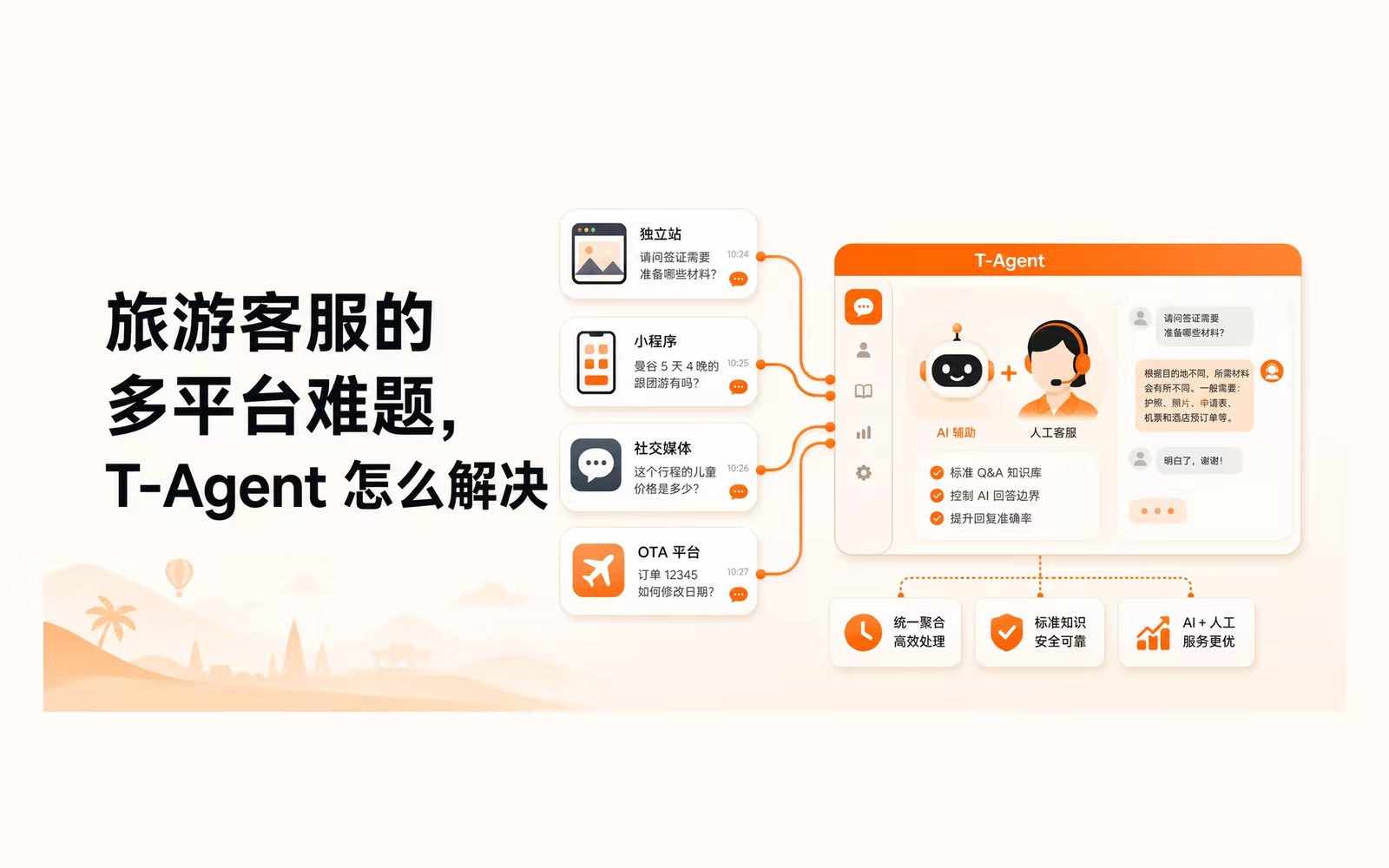
Customer service in travel differs from ordinary e-commerce support. Travelers may ask questions through OTAs, independent websites, Mini Programs, Xiaohongshu, Douyin or overseas social media. Their questions often depend on a particular product, order or travel plan.
Support teams switch between systems to find documents, look up orders, confirm rules and reply in a language the traveler understands. The questions are not always complicated. The difficulty is the number of channels, scattered information, repetition and inquiries that continue after the working day ends.
The daily challenges of travel support
Separate platforms mean many accounts to maintain
Independent websites, Mini Programs, Xiaohongshu, Douyin and different OTAs often have separate support interfaces. Agents log in to each account, check unread messages and assemble traveler and order details.
Messages are easy to miss, and handling one traveler's question requires repeated switching. Overseas business adds Facebook, Instagram, WhatsApp or email, with different message formats and languages.
Repeated questions still require repeated searches
Travelers frequently ask about opening hours, entrances, child tickets, same-day availability, departure piers or refunds in bad weather. Answers may already exist in product descriptions, OTA materials or site notices, but agents still search and copy them repeatedly.
This consumes time and creates inconsistent answers. If two agents quote different versions of a refund policy, travelers soon notice the contradiction.
After-hours demand and multilingual consistency
Travelers' schedules do not match support hours. Evening, weekend and distant-time-zone inquiries may wait until the next day.
Multilingual service involves more than translation. Product names, times, prices, inventory and cancellation conditions must remain consistent, while responses account for order status and group size. Fluent wording with incorrect business conditions is still poor service.
Product, order and traveler details live in different places
To answer “I'm bringing a child tomorrow—which entrance should we use?”, an agent needs product rules, the order date, party size and on-site arrangements. Neither a product description nor an order alone is enough.
When details are spread across TMS, OTA consoles, chat history and internal documents, agents assemble context manually. Order exceptions, refunds and changes take even longer.
Where common support tools fall short
A shared inbox does not guarantee a shared workflow
Some tools collect messages in one inbox and solve the question of where messages are. If product details, orders and handling rules remain elsewhere, agents still open other systems. A shared entry point may do little to reduce the actual work.
Unrestricted AI answers lack clear boundaries
General-purpose AI can quickly generate a complete-sounding reply without knowing which statements have business evidence and which are inferred. Refunds, changes, compensation and policies for particular traveler groups cannot depend on the model completing a sentence.
NIST identifies unsupported generated content as a characteristic risk of generative AI. In travel support, one unconfirmed rule in an answer can turn into a complaint. See the NIST Generative AI Profile.
RAG requires work on document splitting and retrieval quality
Traditional retrieval-augmented generation often splits source documents into chunks, creates vectors and retrieves similar chunks when a traveler asks a question. Travel rules frequently span headings, tables and footnotes: a price appears in a table, applicable dates in the next paragraph and exceptions in a note.
Poor boundaries can remove necessary conditions from retrieved information. Updates also require maintenance of old chunks, vector indexes and retrieval quality. Businesses can spend heavily on a knowledge base while agents still need to verify answers manually. The UK government's practical discussion of RAG systems also identifies preprocessing, chunking, indexing and evaluation as important maintenance work.
Multilingual features may stop at translation
Some tools translate replies without managing product rules, prices and refund conditions as shared business knowledge. Answers drift between versions as languages change, leaving agents to check every sentence.
How T-Agent approaches the work
Connect channels to one support console
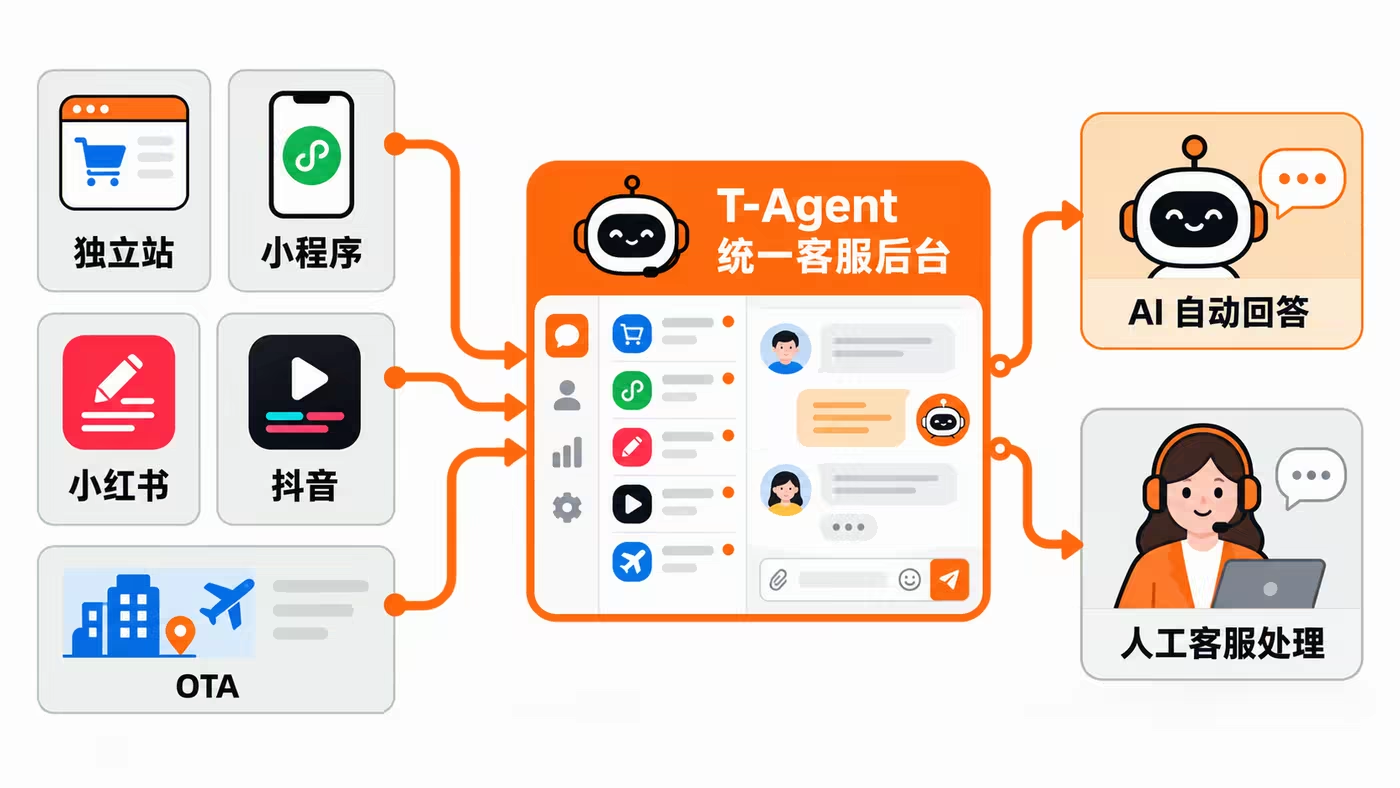
T-Agent brings inquiries from independent websites, Mini Programs, Xiaohongshu, Douyin and other connected channels into one console. Agents view messages in one workspace and understand the context through traveler, channel and order details, without logging into a different account for every inquiry.
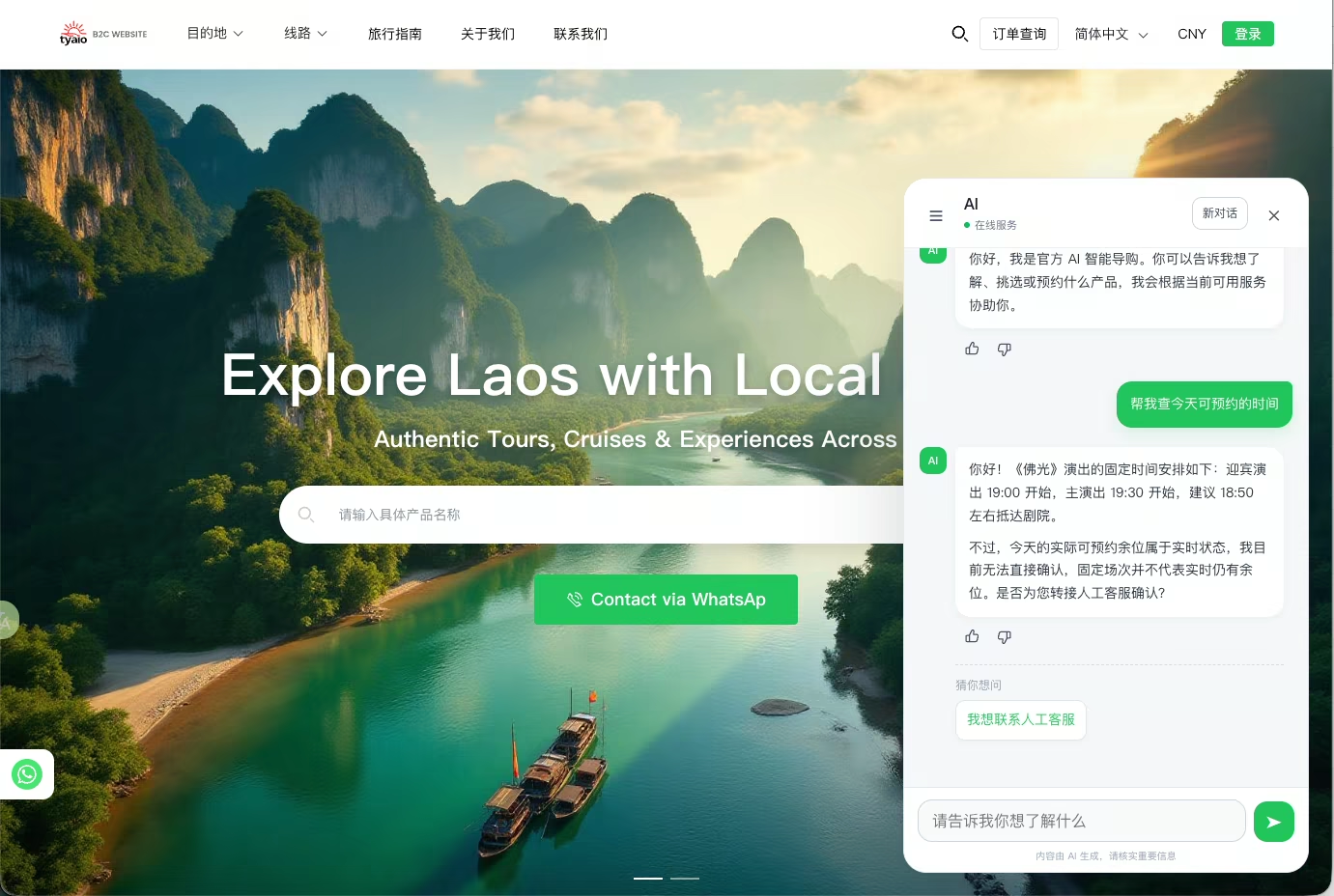
The independent website is one traveler-facing entry point. Travelers can ask about availability and transfer to a human agent when needed.
Agents can handle messages from any connected channel in the same console.
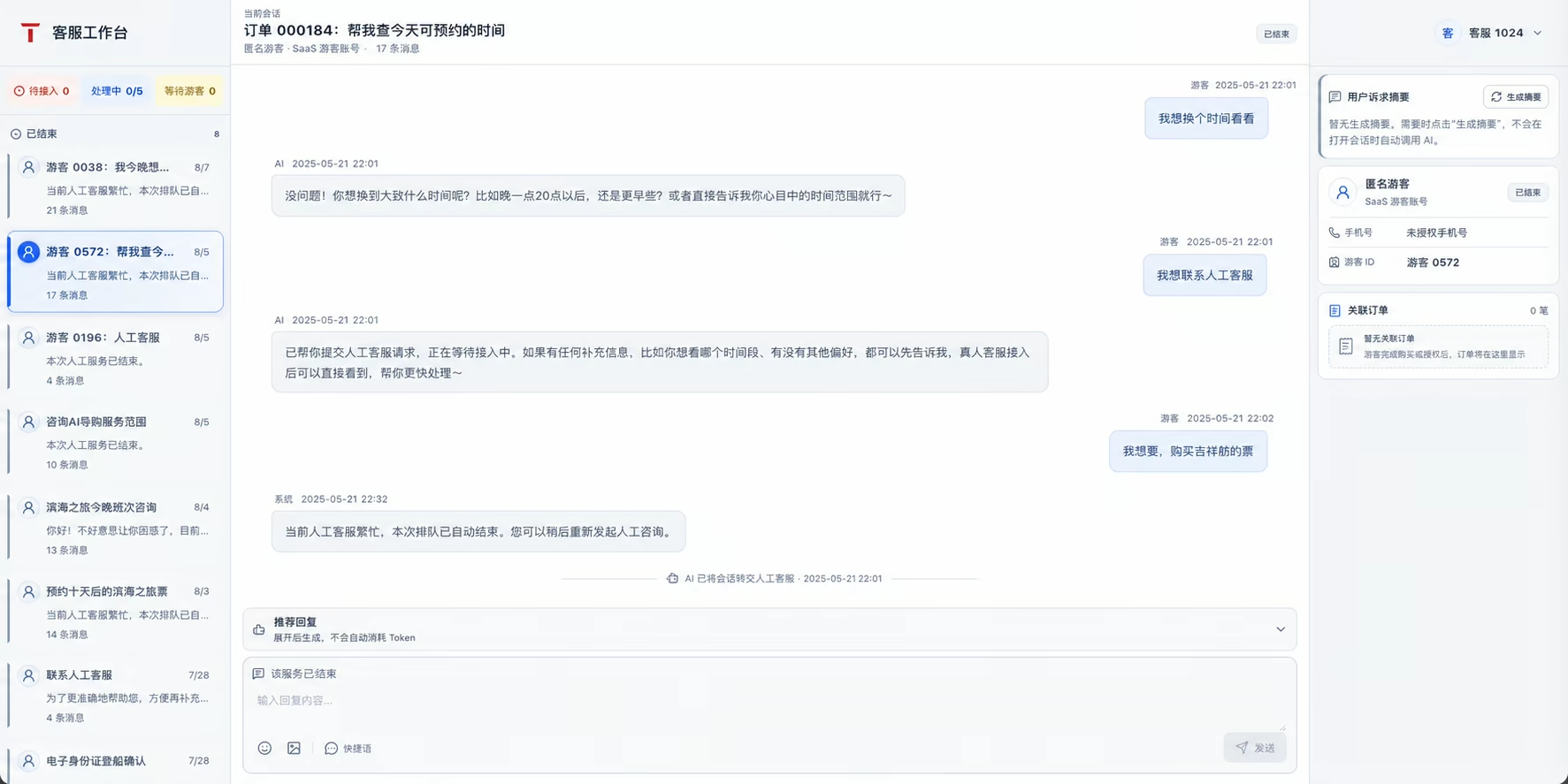
The console brings conversations, traveler details, related orders and human-service status together.
Collecting messages also makes sources and handling records easier to trace. Each channel remains available, while daily support work takes place in one workspace.
Use an agent to organize source materials into standard Q&A
T-Agent follows the llm-wiki approach associated with Andrej Karpathy: an agent reads source materials, organizes them into coherent, independently readable knowledge pages and maintains them as new material arrives. The llm-wiki description calls this compiling knowledge.
For customer support, operators can provide product manuals, public OTA materials, order rules, site notices and historical replies. The agent extracts common traveler questions and creates standard Q&A. Source documents remain as evidence, while the Q&A supports outward-facing answers.
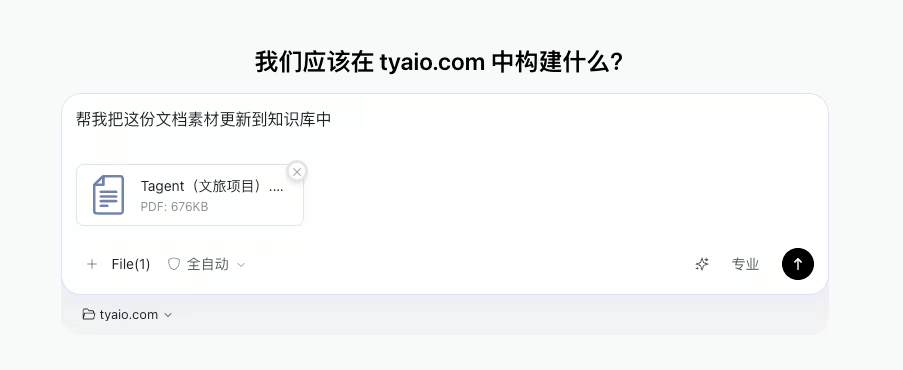
Provide existing documents to T-Agent. The agent reads and organizes them before updating the Q&A used by support.
For example:
Question: Which ticket should I buy when traveling with one child?
Answer: Please confirm the child's age and travel date first. If the child meets the child-ticket requirements, the relevant ticket type will appear for available departures. If the age rule cannot be confirmed, transfer the inquiry to a human agent.
The Q&A records both what can be answered and what needs confirmation. For travel questions with stable source structures and clear response boundaries, this is easier to review than assembling a fresh answer from fragments every time. It also avoids the initial work of setting up a vector database and query engine.
Route questions by risk and required judgment
T-Agent can route inquiries according to their type and information needs:
| Question type | Handling | Examples |
|---|---|---|
| A clear answer exists in Q&A | AI replies directly | Opening hours, entrances, permitted items |
| Live business information is needed | AI queries information and drafts a reply | Order status, available departures, travel reminders |
| Human judgment is required | Transfer for confirmation | Refunds, changes, compensation, questions outside the sources |
AI does not invent rules involving money, order changes or exceptional refunds. Travelers see a transfer notice; the receiving agent gets the source channel, question, related order and answers already given.
Give agents practical AI assistance
In the support console, T-Agent prepares a traveler summary, lists related orders and suggested follow-up questions, and drafts a response for checking. If a traveler sends an order screenshot and asks “What should I do?”, an agent can first see the order number, product, travel date and source channel. The system can suggest confirming whether the ticket has been used and whether the traveler wants a refund or a change.
AI produces a draft; a person checks it before sending. Agents can edit wording, add on-site information and send the final response. Cross-language inquiries use the same confirmed Q&A, so product names, times, prices and refund conditions stay tied to the same business version.
Improve Q&A through real conversations
T-Agent can organize newly resolved questions into Q&A candidates, identifying the final answer, applicable products and language. Candidates enter the answerable knowledge base only after support or operations confirms them.
This improvement process preserves reviewed human work for reuse. It does not let AI change business rules on its own. Existing Q&A can also be updated or disabled when prices, inventory or refund policies change.
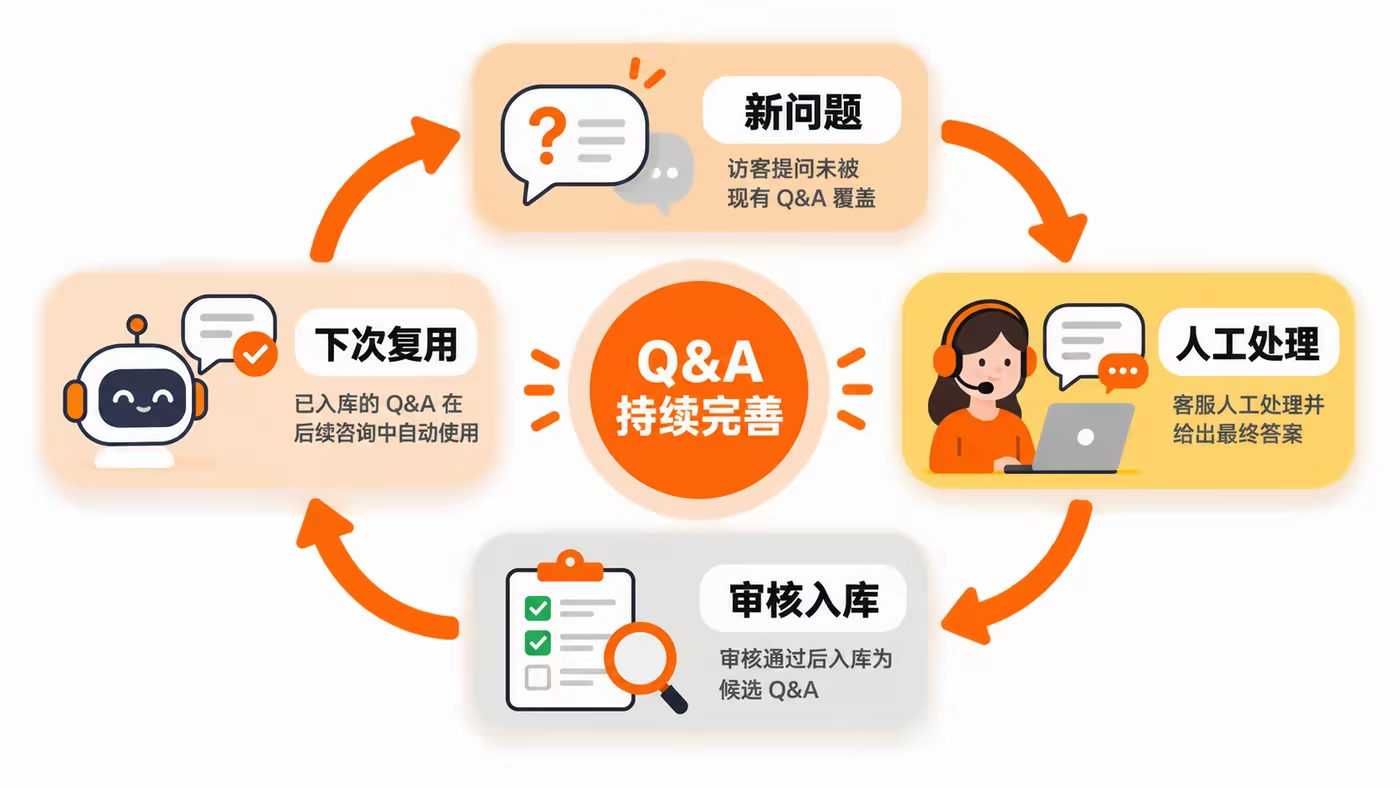
Which results to watch
Travel businesses can track metrics connected to daily work: the share of repetitive questions handled automatically, transfer reasons, first-response time, average human handling time and the number of Q&A revisions.
These measures show which channels still concentrate demand, which materials need improvement and which questions should remain with people. Connecting channel aggregation, Q&A preparation and agent assistance gives support teams a chance to spend less time searching and copying, and more time handling service that requires experience.
T-AGENT
Turn business questions into analysis you can act on
Connect authorized travel business data and plugins to identify the next operational action.